

In the world of Sansa and Arya Starks, the representation of strong female characters can often look like emotionally stunted masculine traits in a woman, think Katniss Everdeen, or a feminine woman post-trauma. While characters like Margery Tyrell show us powerful woman, especially in terms of politics, today I want to turn to two characters who I feel are talked about way less than they deserve in the conversation around strong female characters and look at what makes me love them so much.
The characters?
Elle Woods from Legally Blonde

And
Geet from 2007’s Jab We Meet
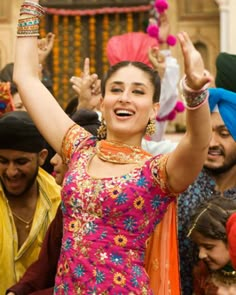
What Sets Elle and Geet Apart in My Opinion?
While not the only ones like this, both these characters are very feminine and extremely strong, fierce and soothing, and in the case of Elle rooted in female friendships. Their girlhood and personality is not a “but” to their power but the source of it. They do not look down upon pink or girly things and show us a different side of what is considered valuable knowledge and strength. Geet’s resilience and Elle’s immense knowledge of the FMCG or fashion and beauty industry make them formidable without them losing their love for clothing (Elle) or their love for makeup, hairdo, dance, and themselves (Geet).
The role these characters play
They take the part of the feminine that media often critiques and caricaturizes, whether in terms of situation ( a manic pixie girl missing her train because of her urge to help a random stranger or a blonde fashion student) and turn it on their head. While Jab We Met, is still centered around the male character- Aditya- Geet comes across as bold and unapologetic loudly, traits female characters are rarely shown to have outside arenas. Even Brianne of Tarth rarely, if ever, was bubbly and loud.
Is the manic pixie girl trope a male fantasy that puts the value of women in the male dream? Yes.
And yes, it does take away from Geet’s presence as a strong female character.
And that’s where Elle shines. Legally Blonde is a movie for the girls. We see girls progressing without losing their girlhood, we see sororities as actual sisterhood instead of made up female rivalry, and even the trope of the blonde and how she speaks is broken down. The nerds can be cruel and bigoted too here and adding an extra touch like a pink perfumed resume, isn’t always a frivolous womanly thing but can actually enhance your chance of being remembered for a position. Being loyal and trusting isn’t always a flaw, even if it can often be, and knowledge of anything can be valuable in the right circumstances. And women who saw themselves as rivals can realize the man isn’t worth fighting for and they are better off in each other’s corner.
To Sum it Up
Before Margot Robbie’s Barbie, we had Elle Woods and Geet, showing us different shades of strong women on the screen who were unapologetically strong and feminine. Despite Geet now always being empowered and Elle’s journey starting with a man as the central point, as writers, we can take some lessons from both these characters. What do you think?
And their effect lingers in the cultural zestiest, where that’s Elle being a healthy depiction of the girl boss over what they turned out to be, or Geet and the picture of power for many Indian woman.
Author’s Note: Thank you for reading. You can support this blog by sharing and if you wish to read more of my work, do check out our store. A special thank you to Shubhr Aakriti for beta reading this piece.

Siya: A Su*cide’s Argument
On paper, she has everything- a dedicated lover, powers that are second to none, and professional success. Yet, she wakes up in a hospital having tried to do the unimaginable and hurt herself, but thankfully she gets a chance to heal. Explore with Siya the depths of familial trauma and healing.
Kindly note, you have to be 25+ to read this work as it has existential and mental health related themes with graphic language.
None of the actions or opinions of the characters are encouraged by the author/work/publisher who take no responsibility.
Please read a review of the work here by the Literature Times, which awarded this work The Legacy of Literature Award. The work also won the Dickens Literary Medal and Woman Writer of the Year by Ukiyoto Publishing.
Paywall-free online reading available at Muses_Saga. (Updates in Progress)
I wouldn’t particularly say that Geeta was a strong femal character. Simply, given the shallowness of the character. She is bold, lively, fierce, I agree! But then, if you see the feminist lens of film, it particularly establishes how showing women in such a way is one dimensional way to see it.